Order enough custom food containers to cover your takeout volume per format until a reorder can arrive, plus a buffer for busy days. Customized Food Containers prints from a minimum of 12 with standard turnaround of about 2 weeks, so this guide shows how to count by dish, match lids and bases, set reorder points and stage orders without overstocking.
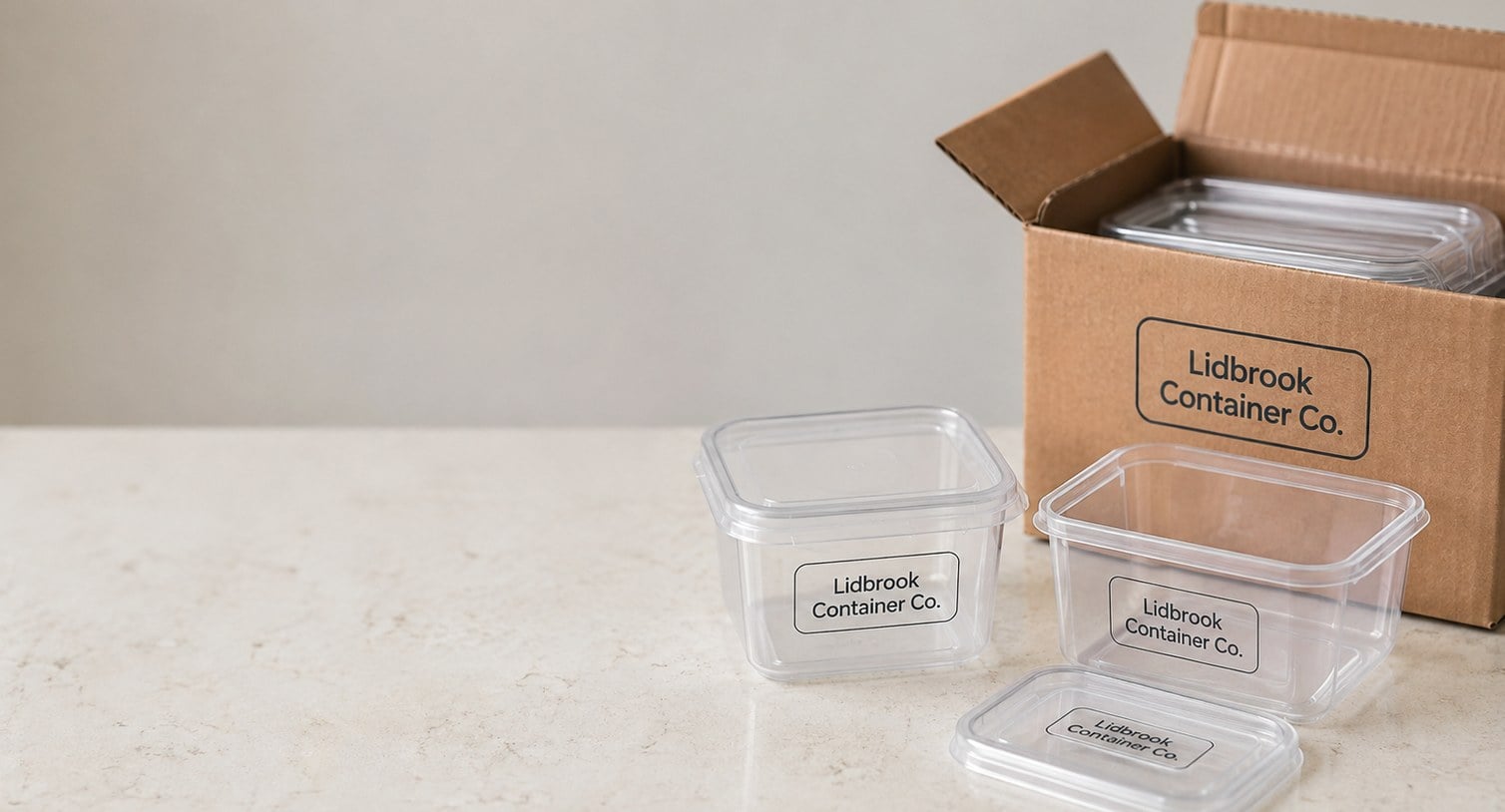
- Minimum order of 12, so new formats can be tested first
- Count containers by dish and format, not by ticket
- Plan lids and bases as matched sets
- Reorder point = usage during about 2 weeks of production and delivery, plus buffer
- Free mockup within 24 hours; pay nothing until you approve
How many custom food containers should a restaurant order the first time?
The right first order of custom food containers covers your normal takeout and delivery volume until the next reorder can arrive, plus a buffer for busy days, and no more. Start from what you already know: how many takeout and delivery orders leave the kitchen on an ordinary week, and how many of those use each container format. That weekly usage, multiplied by the weeks between reorders, is your baseline.
Because standard turnaround at Customized Food Containers is about 2 weeks after you approve the design, the reorder window sets the floor. If a run of custom food containers has to last until a fresh batch lands, it needs to cover at least the production time plus the days you need to notice stock running low and place the order.
New concepts without sales history can start small. Customized Food Containers prints from a minimum order of 12, so a kitchen can test a printed round deli tub or meal-prep tray at the pass, watch how fast it moves, and size the next run on real numbers rather than guesses. The aim of a first order is information as much as packaging.
Should you count containers by dish or by order?
Count custom food containers by dish, not by order, because a single takeout ticket often uses several formats at once. A family dinner order might leave in one large rectangular meal-prep tray, two round deli tubs for sides and a handful of portion cups for sauces. Planning by order hides that mix and leads to running out of the smaller formats first.
The simplest method is to pull your point-of-sale item report and tag every menu item with the container it leaves in. Then add up usage per container format rather than per meal. Patterns appear quickly:
- Mains usually drive demand for rectangular meal-prep containers or larger round tubs.
- Soups, curries and stews drive demand for soup and hot-fill containers.
- Sides, dips and dressings drive demand for round deli and portion containers, often at a higher count than the mains.
Once each format has its own usage figure, you can order each one on its own cycle instead of guessing a single number for the whole kitchen.
How do you plan lids and bases so the counts match?
Plan custom food container lids and bases as a pair, with one lid for every base, unless a format genuinely ships open. Mismatched counts are the most common stock problem in takeout packaging: a kitchen has a shelf of printed bases and no lids, or the other way round, and the spare half of the set is useless.
Customized Food Containers quotes the base and the lid together for this reason, so the printed lid always arrives with a base that fits it. When you plan quantities, think in sets rather than parts. If the lid carries your logo and the base is plain, the lid count is the one that defines how many branded orders you can send out.
A few habits keep sets matched in daily service:
- Store lids and bases for the same format on the same shelf so staff see both levels at a glance.
- Count the scarcer half when you check stock, not the fuller one.
- Keep lids for different sizes clearly separated, since a lid that nearly fits wastes time at the pass.
How much buffer stock of custom food containers should you keep?
Keep enough buffer stock of custom food containers to absorb your busiest realistic stretch, such as a holiday weekend or a delivery-app promotion, on top of the normal run between reorders. The buffer is insurance against two things: a demand spike and a reorder that lands later than planned.
The size of that buffer depends on how predictable your kitchen is. A meal-prep business with fixed weekly subscriptions can run lean because demand is known in advance. A restaurant that relies on walk-in takeout and weather-driven delivery needs a thicker cushion. Caterers sit in between, since bookings are known ahead but a single large event can use a whole carton of one format in an afternoon.
Remember that buffer stock takes space. Custom food containers nest well, but a dry-store cupboard still has limits, and printed lids should be stored flat, clean and away from heat so the artwork stays sharp. If storage is tight, a smaller buffer with a firmer reorder point is safer than a large pile nobody can reach.
When should you reorder custom food containers?
Reorder custom food containers when the stock on hand would just cover the production and delivery window plus your buffer, not when the shelf is nearly empty. That moment is your reorder point, and it is worth writing down for each format so anyone on the team can spot it.
A simple way to set it:
- Work out the weekly usage for one container format from your sales report.
- Multiply by the weeks a reorder takes, allowing about 2 weeks of standard turnaround plus a few days for approval and delivery.
- Add your buffer for busy periods.
- Mark that level on the shelf or in your inventory sheet and reorder when stock reaches it.
Repeat orders are quicker to start because your artwork is already approved, but production time still applies. If an event or promotion is coming, place the order early or ask about express shipping when you request your quote. Customized Food Containers can repeat the same printed design run after run, so reordering is about timing rather than redesigning.
Is it better to place one large order or stage smaller reorders?
Staged reorders of custom food containers usually suit kitchens whose menu, branding or volume is still changing, while one larger order suits a stable menu with steady sales and space to store the stock. Both approaches work; the question is which risk you would rather carry.
| Approach | Works best when | Main risk |
|---|---|---|
| One larger order | The menu is settled, the logo will not change and storage is available | Stock that outlives a menu or brand update |
| Staged smaller reorders | The concept is new, seasonal dishes rotate or space is tight | Running out if a reorder is placed too late |
| Mixed plan | Core formats sell steadily but specials change | More formats to track on the shelf |
Larger runs generally improve the value of each container, because setup work is spread across more pieces, so ask for quotes at more than one quantity to see how the numbers move. A mixed plan is common: order the core round tub and meal-prep tray in volume, and keep seasonal or event formats on smaller staged runs.
How do multi-site kitchens and events change the quantity math?
Multi-site groups and event-led businesses should plan custom food containers per location or per booking first, then combine the totals into one order. Each site has its own sales pattern, so averaging across the group tends to leave the busiest kitchen short and the quietest one overstocked.
For a restaurant group, collect usage by format from each site, set a reorder point for each, and place a consolidated order with a clear split for delivery. The multi-site and foodservice programmes page covers how shared designs and local details can run in a single order.
For events, count guests and dishes rather than weekly averages. A caterer serving a boxed lunch needs one meal container per guest, plus sides and sauces, plus spares for late additions and spills. New openings face a similar question with no history at all; the guide to custom food containers for restaurant grand openings covers launch-week planning. In every case, a short conversation through the quote form is the fastest way to turn those counts into a firm order.
What should you send to get a quantity-accurate quote?
To get an accurate quote for custom food containers, send the formats you need, an estimated quantity for each, where your logo should print, and the date you need stock in the kitchen. Customized Food Containers uses those details to recommend quantities that fit your reorder rhythm and returns a free mockup within 24 hours.
Helpful details to include:
- Your weekly or per-event usage for each container format, even as a rough range.
- Whether lids, bases or both should carry the print.
- Any hot-fill, freezer or microwave use, so the right material is suggested.
- Storage limits, if space will cap how much you can hold.
You pay nothing until you approve the design, and revisions are unlimited and free. Start on the custom quote page or read how it works first.
Frequently asked questions
How do I estimate custom food container usage without sales history?
Custom food container usage for a new kitchen can be estimated from your expected covers, the share of orders you expect to leave as takeout, and the format each dish uses. Start with a small run from the minimum of 12, track how fast each format moves for a few weeks, then size the next order at Customized Food Containers on what you actually used.
Should I order more lids than bases for custom food containers?
Custom food container lids and bases are best ordered in equal numbers, since a lid without a base, or a base without a lid, cannot leave the kitchen. If staff damage lids more often during service, raise the buffer for that format rather than splitting the set. Customized Food Containers quotes matched sets so the printed lid always has a base that fits it.
How do I work out a reorder point for custom food containers?
A reorder point for custom food containers is the stock level that just covers the time a new batch takes to arrive plus your safety buffer. Multiply weekly usage by the weeks needed for approval, production of about 2 weeks and delivery, then add stock for busy days. Reorder whenever the shelf drops to that level.
Can I split one order of custom food containers across several formats?
Custom food container orders can cover several formats, such as round deli tubs, rectangular meal-prep trays and portion cups, so one quote reflects how your menu actually leaves the kitchen. Tell Customized Food Containers the quantity you want for each format and where the logo should print, and the mockup will show every format before you approve anything.
How much storage space do custom food containers take up?
Custom food containers nest inside each other, so bases stack compactly, while lids stack flat in their own column. The space a run needs depends on the formats and quantities you choose, so ask Customized Food Containers how the order will be packed when you request a quote. Keep cartons dry, clean and away from ovens or fryers.
Do custom food containers expire if I order too many?
Custom food containers do not spoil like ingredients, but overstock carries other risks. A menu change can leave you holding a format you no longer use, and a logo refresh can make printed stock look dated. Heat, damp and crushing can also damage cartons in a busy back room, so order quantities you expect to use within a sensible planning window.
How many custom food containers does a caterer need per guest?
Custom food containers for catering are usually counted as one main container per guest, plus separate containers for any sides, sauces or desserts served apart, plus spares for late additions and spills. The exact mix depends on the menu and service style, so share the guest count and dishes with Customized Food Containers when you ask for a quote.
Should a meal-prep subscription order custom food containers weekly or in bulk?
Custom food containers for a meal-prep subscription can usually be ordered in larger, less frequent runs, because weekly demand is known in advance from the subscriber list. Set the run to cover several weeks plus a buffer for new sign-ups, and reorder once stock reaches the level that covers about 2 weeks of production and delivery time.
Can I change quantities between reorders of custom food containers?
Custom food container reorders do not have to repeat the same quantity each time. Customized Food Containers keeps your approved artwork, so you can scale a format up for a busy season, scale it down when a dish leaves the menu, or add a new format to the next run. Each reorder still follows the usual production time, so plan ahead.
What happens if I run out of custom food containers before a reorder arrives?
Custom food containers that run out before a reorder lands usually force a kitchen back onto plain stock packaging for a while, which works but loses the branding. To avoid the gap, set a reorder point with a buffer, and ask about express shipping when time is short. Customized Food Containers can repeat an approved design without starting the artwork again.
Do larger orders of custom food containers change the value per container?
Custom food container orders in larger quantities generally improve the value of each piece, because setup work for printing is spread across more containers. Format, material, print colors and the number of decorated parts also shape the quote. Ask Customized Food Containers for quotes at a couple of quantities to see how the numbers move before deciding how much to hold.
Get a free mockup for your food containers
Send your logo or idea and the quantity you have in mind. Customized Food Containers returns a free mockup within 24 hours, you approve the design before anything is produced, and standard turnaround is about two weeks with faster options available. Get a custom quote.