The biggest first-order mistakes with custom food containers are choosing a format before testing real dishes, approving artwork without checking it at actual size, and treating lids and bases separately. Customized Food Containers sends a free mockup within 24 hours with unlimited revisions, so this guide shows how to catch each mistake before approval, not after the run arrives.
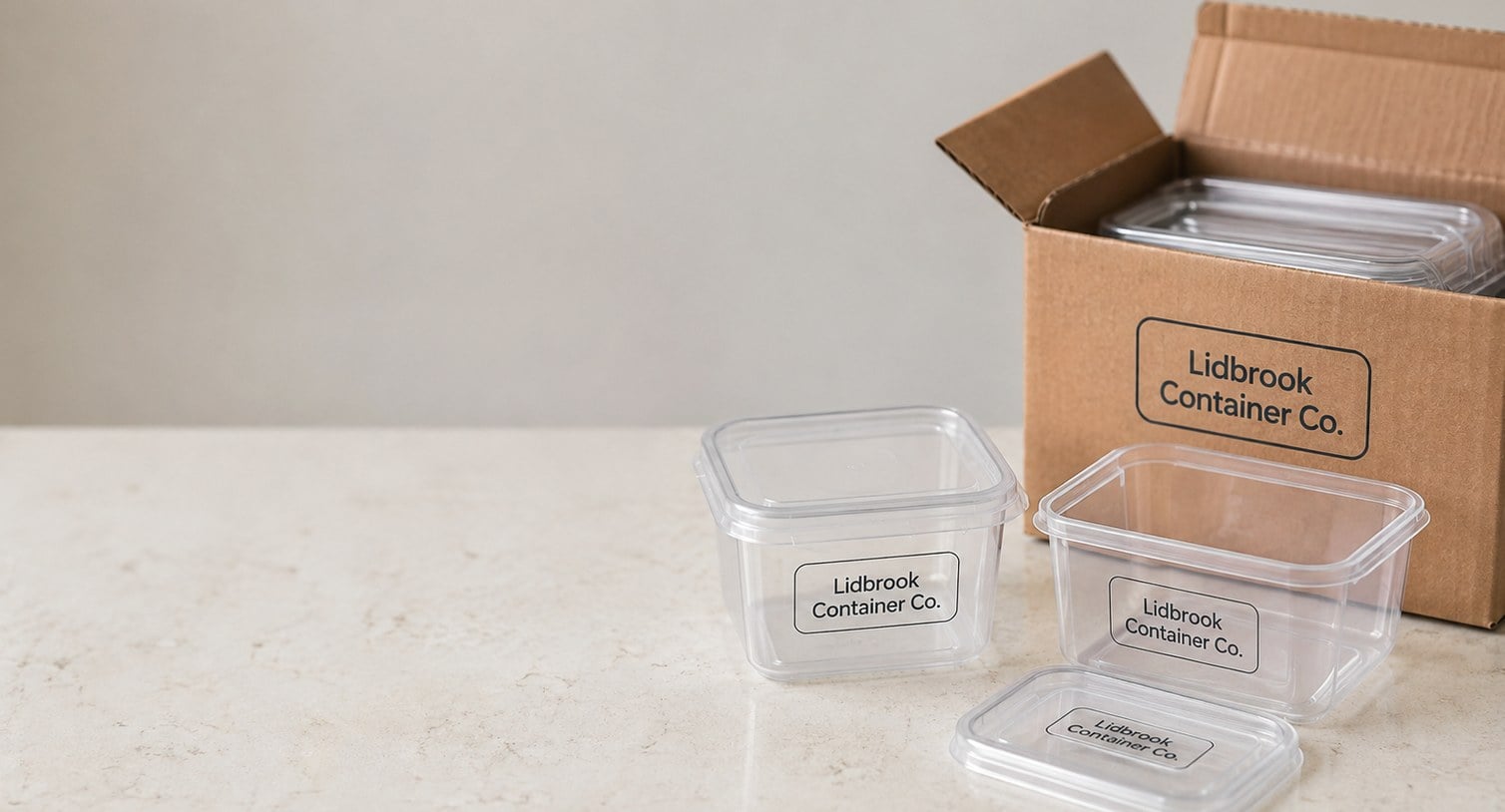
- Test real dishes in a format before ordering a full run
- Judge artwork at full size and against the filled container
- Order lids and bases as matched sets
- Standard turnaround is about 2 weeks after approval
- Free mockup within 24 hours; pay nothing until you approve
What are the most common mistakes on a first custom food container order?
The most common mistakes on a first order of custom food containers are choosing a format before testing it with real dishes, approving artwork without checking it at actual size, and treating the lid and base as separate decisions. Each one is easy to avoid if you catch it before you approve the mockup, and expensive in time if you catch it after the run is printed.
Most first-time buyers are restaurant owners, caterers and meal-prep kitchens who know their food extremely well but have never specified packaging. The errors are rarely about the print itself. They come from decisions made at a desk that the kitchen, the delivery driver and the customer later have to live with: a tub that is slightly too shallow for the curry, a logo that disappears against a dark sauce, a lid that only fits one of the three bases you ordered.
The good news is that the ordering process at Customized Food Containers is built to surface these issues early. You get a free mockup within 24 hours, unlimited free revisions and you pay nothing until you approve the design. The rest of this guide walks through each mistake and the simple check that prevents it.
Why is picking a container format before testing your dishes a mistake?
Picking a food container format from a catalog without filling one with your real dishes is the mistake that causes the most regret, because shape and depth decide how food travels, not the print. A container that looks right on screen can let a saucy dish slosh against the lid, crush a garnish or leave a portion looking small and lost.
Before you approve anything, plate your best-selling takeout dishes into the formats you are considering. Pay attention to these points:
- Fill line: does the portion sit comfortably below the rim, or will it press against the lid in a delivery bag?
- Sauce and texture: wet dishes such as stews and curries suit deeper round deli tubs, while dry or layered meals often look better in a rectangular meal-prep tray.
- Separation: combo plates with a crisp side and a wet main may need a divided layout, which the guide to single vs multi-compartment food containers covers in detail.
- Hot or cold service: hot-fill dishes belong in formats designed for them, like the soup and hot-fill containers range.
Because Customized Food Containers prints from a minimum of 12, you can run a small trial of a format with real service before committing a large run to it.
How can artwork go wrong on printed food containers?
Artwork on printed food containers usually goes wrong in scale, contrast and clutter rather than in the logo itself. A design that looks bold on a laptop can shrink into a smudge on a curved lid, and a pale logo can vanish once a container is filled with rice or a light soup.
Three habits prevent almost every artwork problem:
- Judge the mockup at real size. Print the proof at full scale or hold your phone next to an actual container. If you have to zoom to read the text, customers will not read it either.
- Check contrast against the food. A clear container shows whatever is inside, so a mid-tone logo can disappear against a brown stew or a green salad. Solid, high-contrast marks read best.
- Cut the text. A logo, one short line and an ordering handle or web address is usually plenty. Long menus, opening hours and taglines compete with the food and date quickly.
Placement matters too. Lids are what customers see first in a stack or a delivery bag, while base prints show when the container is open on a desk. If you are unsure which surface to brand, ask for both versions in your mockup; revisions at Customized Food Containers are free and unlimited. For more on print methods and file preparation, see the existing guide on how to print your brand on custom food containers.
Why should the lid and base be planned together?
The lid and base of a custom food container should always be planned as one matched set, because a printed lid that fits only some of your bases forces the kitchen to improvise during the busiest hour of service. Buyers who choose a lid for its look and a base for its capacity often find the two families do not share a rim.
When you request a quote, list every base you plan to use and ask which lid fits each one. Some round deli formats share a single lid across several depths, which simplifies storage and lets one printed lid design cover multiple portion sizes. Rectangular trays more often need a lid made for that exact footprint.
Plan the counts together as well. If lids and bases arrive in different quantities, the shortfall on one side strands the other in the storeroom. The site’s article on why kitchens run out of lids covers this in depth, but the short version for a first order is simple: order matched sets, confirm the fit on the mockup and keep spares of both halves on the same shelf.
What goes wrong when you ignore storage and the kitchen workflow?
Ignoring storage and workflow is a quiet mistake that shows up after delivery, when a run of custom food containers arrives and has nowhere sensible to live. Containers that nest well take up little space; formats that do not nest, or lids stored in a different spot from their bases, slow the line down.
Before you order, walk through how a container moves through your kitchen:
- Where will the cases be stored, and can staff reach them without leaving the line?
- Will the packing station hold enough lids and bases for a full rush without a restock run?
- Do your delivery bags and grab-and-go fridges fit the chosen footprint, and do containers stack flat when full?
- If you also batch-cook ahead, are the containers suited to cold storage? The freezer and batch-prep containers range is designed for that job.
A quick conversation with whoever runs the pass at peak time is often the most useful step in the whole order. Front-of-house staff and drivers notice packaging problems that owners never see.
How does timing trip up first-time buyers?
Timing trips up first-time buyers of custom food containers when they place the order as an afterthought, a few days before a launch or a catering booking. Standard turnaround at Customized Food Containers is about 2 weeks after you approve the design, with faster turnaround available with express shipping, so the clock starts at approval, not at the first enquiry.
Work backward from the date the containers need to be on your shelf:
| Stage | What happens | Common mistake |
|---|---|---|
| Quote request | You share formats, quantities and artwork | Leaving out one of the formats you need |
| Mockup | Free mockup within 24 hours | Waiting days to review it |
| Revisions | Unlimited free changes | Gathering sign-off from partners too late |
| Production and delivery | About 2 weeks after approval | Assuming the clock started at the enquiry |
The fastest way to lose time is a slow approval loop. Decide in advance who signs off on the design, and review the mockup the day it arrives. If you are planning a large launch, the guide to bulk custom food containers with logo explains how to stage bigger runs.
What should a first-time buyer check before approving the mockup?
Before approving a mockup of custom food containers, a first-time buyer should check spelling, contact details, scale, contrast, placement, format and lid fit, in that order. Approval is the point after which changes cost time, so a careful review here saves weeks later.
Use this short checklist on every proof:
- Read every word aloud, including the web address and social handle, and test that the handle or link actually works.
- Confirm the format names and the number of each format match what you need.
- Check that each printed lid is listed against the bases it fits.
- View the design at full size and against a photo of the filled container.
- Make sure the person who owns the brand, not just the person placing the order, has seen it.
Because you pay nothing until you approve the design at Customized Food Containers, there is no pressure to sign off on a version you are unsure about. Ask for another revision instead. When you are ready, start with a custom food container quote and see how it works for the full process.
Frequently asked questions
What is the most common mistake on a first custom food container order?
The most common mistake on a first custom food container order is choosing a format without plating real dishes in it. Shape and depth decide whether food travels well, so test your best-selling takeout items first. Customized Food Containers prints from a minimum of 12, which makes a small trial run of a new format a practical step before a full order.
Can I fix a typo on my custom food containers after the design is approved?
Custom food containers printed with a typo cannot be corrected once production has started, so the fix has to happen before approval. Read every word on the mockup aloud, including web addresses and handles. Revisions are unlimited and free until you approve, and you pay nothing before that point, so ask for another proof whenever something looks wrong.
Why does my logo look smaller on the food container than on my screen?
Food container mockups are often viewed zoomed in on a large monitor, which makes a logo feel bigger than it will be on a real lid or base. Print the proof at full size or hold your phone beside an actual container. If the text is hard to read at arm's length, ask for a bolder, simpler version.
How do I know if a dish will overfill its food container?
A food container that is too shallow for a dish shows it quickly when you plate a normal portion and close the lid. Food pressing against the lid, sauce near the rim or a garnish getting crushed all mean you need a deeper format. Testing this before ordering takes minutes and avoids a run of containers that suit nothing.
Why should I think about food color when designing printed food containers?
Printed food containers with a clear or translucent body show the food behind the artwork, so a mid-tone logo can blend into a brown curry or a green salad. Choose solid, high-contrast colors and check the mockup against a photo of the filled container. Customized Food Containers can show alternative color versions in a revision at no charge.
Should I put a lot of text on custom food containers?
Custom food containers work best with very little text: a logo, one short line and an ordering handle or web address. Long menus, opening hours and taglines crowd the design, compete with the food and go out of date quickly. A clean, bold mark is easier to recognize in a delivery bag and stays accurate across reorders.
Why should I check how food containers fit my kitchen before ordering?
Food containers that do not suit your storage and packing station slow down service even when the print is perfect. Check where the cases will live, whether lids and bases can sit together near the line, and whether filled containers stack flat in delivery bags and fridges. A quick walk-through with your peak-shift staff usually reveals problems early.
Is it a mistake to approve a food container mockup on a phone?
Approving a food container mockup on a phone alone is risky because small screens hide spelling errors and make contrast hard to judge. Open the proof on a larger screen as well, then view it at real size beside a container. Customized Food Containers sends the free mockup within 24 hours, so there is time to review it properly.
Who on my team should sign off on a custom food container proof?
A custom food container proof should be approved by the person who owns the brand and by someone who runs the kitchen or pass at peak times. The brand owner checks the logo and wording, while the kitchen lead confirms formats, lid fit and quantities. Agreeing on these approvers before the mockup arrives avoids a slow sign-off loop.
Can leaving print placement to the supplier cause problems with food containers?
Food containers printed without a clear placement decision can end up with the logo on a surface customers rarely see. Lids are what people notice in a stack or a bag, while base prints show once the container is open. Ask Customized Food Containers for mockups of both placements and choose based on how your customers actually receive the food.
Why do some takeout food containers leak in delivery bags?
Takeout food containers usually leak because the lid and base come from different families, the dish is filled too close to the rim, or a wet dish sits in a shallow format. Order lids and bases as matched sets, confirm the fit on your mockup and leave headroom for sauces so containers stay sealed through the journey.
Get a free mockup for your food containers
Send your logo or idea and the quantity you have in mind. Customized Food Containers returns a free mockup within 24 hours, you approve the design before anything is produced, and standard turnaround is about two weeks with faster options available. Get a custom quote.