Custom food containers stay clean and sharp when you keep cartons sealed until use, store them dry and away from heat, rotate the oldest stock first and keep bases and lids together. Customized Food Containers prints your logo to last through normal service, and a little care in the stock room protects that print from the carton to the customer's table.
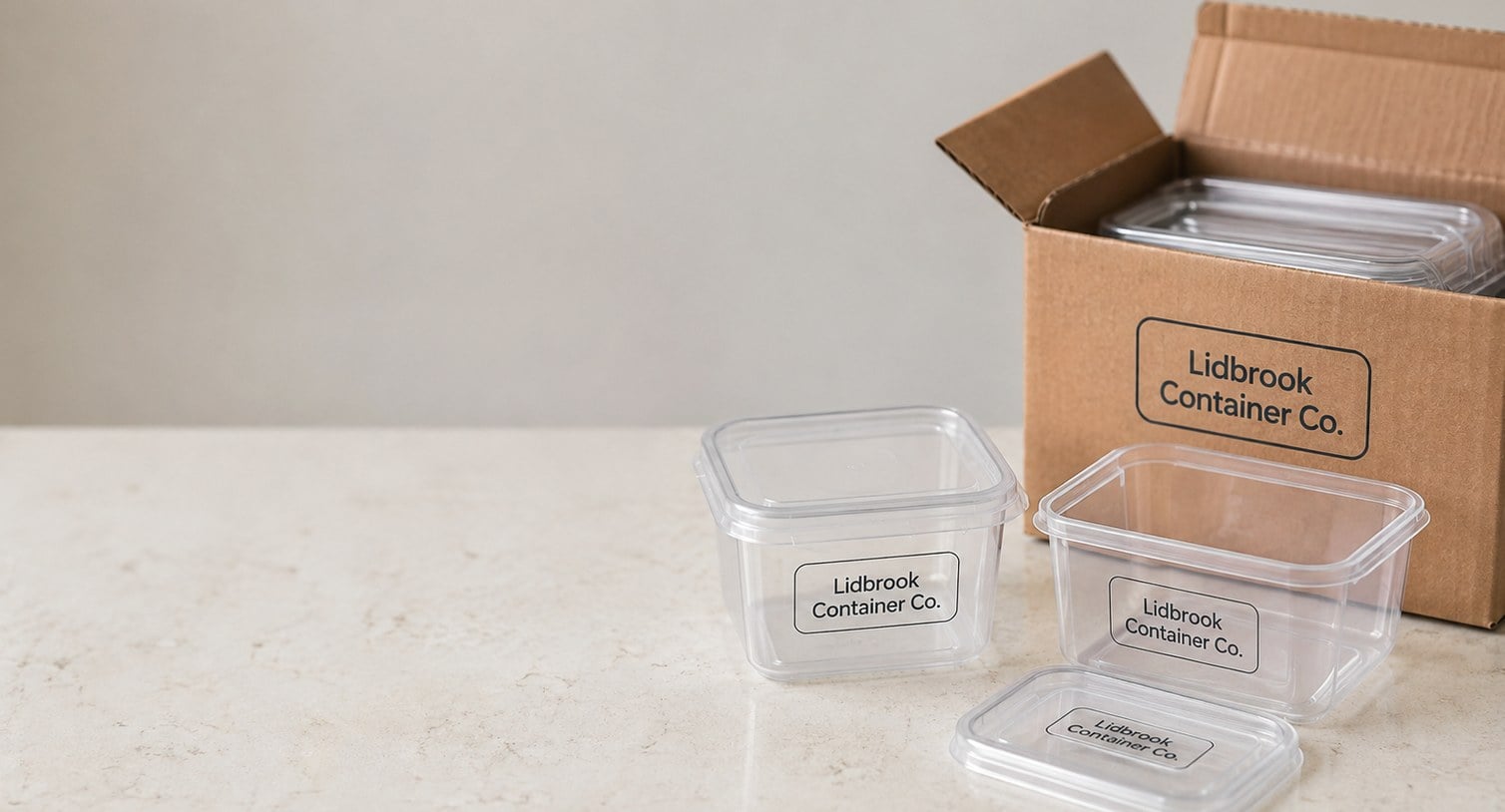
- Keep cartons sealed and off the floor until the day of use
- Store away from ovens, fryers, dish machines and direct sun
- Rotate oldest printed stock first and keep bases with their lids
- Ask about the right format for freezer, hot-fill or reuse before ordering
- Free mockup within 24 hours, about 2 weeks standard turnaround
How should you store custom food containers once the order arrives?
Store custom food containers in their sealed shipping cartons, off the floor, in a dry room away from heat and direct sunlight, and open one carton at a time as the line needs it. That single habit keeps dust, grease and moisture away from the food-contact surface and keeps the printed logo from being scuffed before a customer ever sees it.
A delivery of printed containers usually arrives in more cartons than the kitchen can use in a week, so the stock room matters as much as the line. Pick a spot that is not next to the walk-in door, the dish machine or the back door, where temperature and humidity swing all day. Shelving is better than the floor because floors get mopped, and wet cardboard is the fastest way to ruin a carton of clean containers.
- Keep the outer carton closed. Tape the flap back down after you pull a sleeve.
- Label each carton. Write the format and the delivery date on the outside so nobody opens the wrong one.
- Stack cartons the way they arrived. Upright cartons protect rims and lid edges from crushing.
- Keep chemicals on a different shelf. Cleaning products and food packaging should never share a rack.
What damages the printed logo on custom food containers?
The printed logo on custom food containers is most often damaged by abrasion, not by food. Sleeves rubbing against each other in an open carton, containers dragged across a steel prep table, and lids tossed loose into a bin all scuff the decoration before service. Heat from a nearby fryer or a sunny window can also warp thin lids and distort the print.
Once the container is in use, the logo is built for the job: a customer carrying a takeout order, a fridge full of meal-prep boxes or a catering crate on its way to an office. What it is not designed for is being cleaned with an abrasive pad or soaked in harsh chemicals between uses, which is why reuse needs its own plan (see the reusable section below).
Practical rules that protect the print:
- Pull containers from the sleeve by the rim, not by sliding the stack across a surface.
- Keep a small working stock at the line and leave the rest sealed.
- Do not store open sleeves under heat lamps or on top of equipment.
- Keep printed lids stacked flat in their own sleeve rather than loose in a drawer.
If you want a logo that copes with more handling, talk to Customized Food Containers about print placement. A mark on the lid top, for example, sees different wear than one wrapped around the side of a round deli base.
How do you keep food container bases and lids matched in storage?
Keep food container bases and lids matched by storing each format’s bases and lids in the same place, counting both when you take stock, and reordering them as a pair. Most lid shortages start in the stock room, when bases and lids are split across different shelves and one runs out first without anyone noticing.
Customized Food Containers quotes the base and the lid together for a reason: a container with no lid is not a usable container. The same logic belongs in your storage plan. Give every format one shelf position, with its lids directly beside or above the bases, and mark the shelf with the format name so a new staff member can find both.
| Habit | Why it helps |
|---|---|
| One shelf position per format | Bases and lids are counted together and run down together |
| Count sleeves, not loose units | Stock checks take minutes instead of a full count |
| Reorder the pair, not one half | Prevents a carton of bases sitting idle for lack of lids |
| Keep a marked reserve carton | Covers a busy weekend while the reorder is produced |
If you run several formats, such as round deli containers and rectangular meal-prep containers, keep their lids clearly separated. Similar-looking lids are easy to mix up on a busy shift.
Should printed food containers go straight from the freezer to the microwave?
Printed food containers should only go from the freezer to the microwave if that specific format is rated for both uses, and the safest instruction for customers is the one your supplier confirms for that container. Freezer use, hot fill and microwave reheating are separate properties, and one container family is not automatically suited to all three.
Before you order, tell Customized Food Containers exactly how the container will be used: frozen batch meals, hot soups, chilled salads or reheated lunches. That decides the format family, and it also decides what you can honestly print on the lid as a reheating or storage instruction. Many meal-prep and batch-cook businesses add a short care line to the lid design, such as remove the lid before reheating or keep frozen until use, so customers handle the container correctly at home.
For frozen ranges, the freezer and batch-prep containers page covers suitable formats. For hot dishes, the soup and hot-fill containers page is the better starting point. In the stock room, keep freezer formats and hot-fill formats in separate, labeled positions so the wrong container never reaches the wrong dish.
Can you wash and reuse custom printed food containers?
Custom printed food containers can be washed and reused only when you order a format and decoration intended for reuse. Single-use containers are designed for one trip, and running them through a commercial dish machine repeatedly can dull the print, cloud the plastic and weaken the lid seal. If reuse is the goal, plan for it before the order, not after.
A returnable or reusable scheme changes the care routine. Containers come back from customers, get inspected, washed, dried fully and stored sealed again before the next fill. That loop needs a container built for repeated cleaning and a print placement chosen for durability. Customized Food Containers can advise on both through the reusable and returnable container programmes, and the comparison page on reusable vs single-use custom food containers sets out which route suits which kitchen.
- Inspect on return. Set aside any container with cracks, warping or a lid that no longer closes.
- Wash with non-abrasive methods. Avoid scouring pads on printed areas.
- Dry completely. Trapped moisture in a nested stack is a hygiene problem.
- Store sealed and covered. Treat washed stock like new stock until it is filled.
How long do custom food containers keep in storage?
Custom food containers keep well in storage for as long as they stay sealed, dry, clean and away from heat, but the practical limit is usually your design, not the plastic. A menu change, a new logo or a new address on the lid can make old stock look out of date long before the containers themselves wear out.
That is why storage and ordering are linked. Rotate printed stock first in, first out, so the oldest carton is always opened next. Before you change any artwork, count what is left and plan the switchover so you are not throwing away good containers with an old phone number on them. If your menu or branding is likely to change, a simpler mark such as your logo and website ages better than a printed dish list.
Customized Food Containers returns a free mockup within 24 hours, offers unlimited free revisions and you pay nothing until you approve the design, so updating artwork for a reorder is straightforward. Standard turnaround is about 2 weeks after approval, with faster turnaround available with express shipping. When you are ready, send your format, artwork and storage plan through the custom quote form.
Frequently asked questions
Where is the best place to store a delivery of custom food containers?
Custom food containers are best stored in their sealed cartons on shelving in a dry room, away from ovens, dish machines, back doors and direct sunlight. Keep them off the floor, where mopping can soak cardboard, and away from cleaning chemicals. Label each carton with the format and delivery date so staff open the right one and use the oldest stock first.
Do printed logos on food containers rub off in a busy kitchen?
Printed logos on food containers are made to survive normal service, from the line to the customer, but abrasion in storage is the main risk. Pull containers by the rim instead of sliding stacks across steel tables, keep lids flat in their sleeves and leave spare cartons sealed. Customized Food Containers can suggest a print placement that suits how your containers are handled.
Can I print a reheating instruction on my custom food container lids?
Custom food container lids can carry a short reheating or storage instruction alongside your logo, such as removing the lid before reheating or keeping a meal frozen until use. The wording should match what the chosen format is actually suited for. Customized Food Containers shows the instruction on your free mockup within 24 hours so you can check the layout before approving.
Should freezer food containers and hot-fill food containers be stored separately?
Freezer food containers and hot-fill food containers should have separate, clearly labeled shelf positions, because the two formats suit different jobs and can look alike once they are out of the carton. Mixing them risks a soup going into a cold-only container. Keeping each format with its own lids also makes stock counts and reorders far simpler for the kitchen team.
Can single-use custom food containers go through a commercial dishwasher?
Single-use custom food containers are designed for one trip and are not meant for repeated commercial dishwashing, which can cloud the plastic, dull the print and weaken lid seals. If you want containers that come back and get washed, Customized Food Containers can recommend a format and print placement built for reuse as part of a reusable or returnable programme.
How should returned reusable food containers be checked before refilling?
Returned reusable food containers should be inspected for cracks, warping, stains and lids that no longer close, then washed with non-abrasive methods, dried completely and stored covered. Any container that fails inspection should be removed from the loop. Customized Food Containers can help plan a returnable programme so the containers and print suit repeated washing from the start.
What happens to leftover printed food containers when my logo changes?
Leftover printed food containers with an old logo can usually still be used, but they will look inconsistent beside new stock. Before changing artwork, count remaining cartons and time the switchover so old stock runs down first. Customized Food Containers offers unlimited free revisions on the new design, and you pay nothing until you approve it.
Why do lids for custom food containers go missing in storage?
Lids for custom food containers usually go missing because they are stored apart from their bases, counted separately or pulled loose into drawers during service. Keep each format's lids beside its bases on one labeled shelf, count both by the sleeve and reorder them as a pair. Customized Food Containers quotes bases and lids together for the same reason.
Is it safe to store custom food containers near the dish pit?
Custom food containers should not be stored near the dish pit, because steam, splashing and chemical overspray can dampen cartons and contaminate the food-contact surface. Choose a dry shelf away from wet areas, heat sources and cleaning products. Keep a small working stock at the line in a closed sleeve and leave the remaining cartons sealed until they are needed.
How much custom food container stock should sit at the line during service?
Custom food container stock at the line should be a small working supply in a closed sleeve, enough for the shift but not the whole week. Leaving full cartons open at the pass exposes containers to grease, heat and scuffing. Customized Food Containers recommends keeping a marked reserve carton in the stock room so a busy service never runs short.
Which printed details age fastest on stored food containers?
Printed details that age fastest on stored food containers are dish names, seasonal messages, promotions, phone numbers and opening hours, because they change while the containers sit on the shelf. A logo with a website or social handle stays accurate much longer. Customized Food Containers can mock up a simpler evergreen design within 24 hours.
Get a free mockup for your food containers
Send your logo or idea and the quantity you have in mind. Customized Food Containers returns a free mockup within 24 hours, you approve the design before anything is produced, and standard turnaround is about two weeks with faster options available. Get a custom quote.